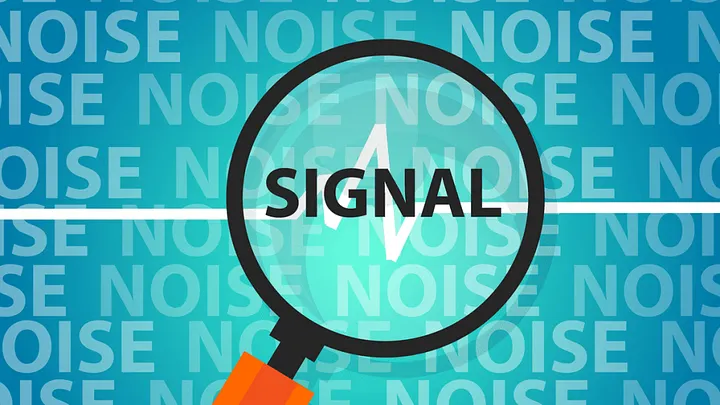
Photo source: Calculating Signal-to-Noise Ratio Using DFT
2025 is gone. Done and dusted. You can cry about it, laugh about it, or feel nothing about it. It won’t matter. It’s dead.
Here you are. At the borderline. Ready to crossover and begin another 365 day marathon. Yet, no goals. No plans. Confused. Maybe scared. Maybe overwhelmed. Others seem to have their calendars already planned out including the restaurants and menus for the next vacation in Malaysia (If you live in Germany, you know what I mean).
But not you.
For you, 2025 passed by like a gust of wind. And 2026 is an incoming storm.
It is easy to watch the 1 minute 2025 highlights of your friends on Instagram; the places they visited, the foods they ate, the parties they attended, and think to yourself, “What a fun and adventurous year they had. Mine was boring and miserable.”
What they don’t show you, are the lowlight moments of their lives; perhaps the depression, the emptiness, the demons within that tormented them almost everyday of the year.
Now those same friends have probably shared with you again big plans and goals for 2026; hit the gym, climb Mt. Everest, visit the Great Wall of China.
But here you are. No big goals. No exciting adventures. 2026 feels like it’s gonna be the same or even worse than 2025.
But it doesn’t have to be. And you don’t have to set big goals. You don’t have to know with surgical precision what to do or who you’re going to become in 2026.
What’s important is that you orient yourself in a direction or path that leads to a better you.
How do you do that?
Here’s what I’m suggesting you focus on for 2026. A worthy goal that would be of immense benefit to you.
Have you ever heard of the term: Signal-to-Noise ratio (SNR)?
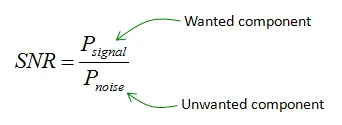
It is a ratio commonly used in engineering to measure the performance of a system. The greater the SNR value the better the system. Lower SNR value is undesirable.
I first came across it in my undergraduate years, as a telecommunications engineering major at the University of Buea, Cameroon.
And most recently, the term became central to my work at Robert Koch Institute in Berlin. We used this metric as a measure of the performance of our AI-powered micro-service. This micro-service predicts if an article is relevant or irrelevant using machine learning. Hundreds of thousands of articles from multiple sources pass through our system and it basically filters out noisy articles from the relevant ones.
You maybe wondering why this got anything to do with setting 2026 goals.
You see, you and I are biological filters. Every second, we are bombarded with information from all sorts of sources. For instance, the blaring music by our neighbour, the unending fireworks on new year’s eve, the Istagram Reels, Facebook posts, Youtube shorts, X tweets, Tiktok videos, etc.
All these information does one of two things. It either increases your SNR or decreases it.
As a biological machine, what if your goal this year can be as simple as:
Increase my signal-to-noise ratio.
What does this really mean?
Take a look again at the SNR formula above: There are 2 ways to increase SNR. You can either increase the relevant (wanted) component, or decrease the irrelevant (unwanted) content.
How?
Increasing the relevant component could mean: Do a side project and share on LinkedIn; Read 2 pages of a book everyday, Spend 15 minutes listening to an audiobook or podcast, learn how to play chess, enroll in an extra course, write a book, exercise 10 minutes a day instead of zero. The list is endless. All these activities will increase your brain signal power and therefore your SNR.
Another way to increase SNR is by decreasing the unwanted component. This can mean reducing the consumption of irrelevant content e.g Spend 2 hours on Istagram instead of 5. It could mean sleeping 7 hours instead of 4; it could mean drinking 3 beers per week instead of 10. These activities reduces the noise power, and hence, increases the SNR.
Consumption without intent is Noise. Consumption with intent is leverage — Dan Koe
So here’s my challenge for you this year.
What if in 2026, you and I set our goal to train the software in our brains to be better filters. To focus more on signal and less on noise.
One technique I found that will help you cut through the noise and focus on the signal in every part of your life is a simple question that Author of The One Thing, Gay Keller, asked:
What is the ONE thing that I can do such that by doing it everything else will be easier or unnecessary?
If you’re a student, what’s the ONE thing you can do that would improve your grades at the end of the semester?
If you’re unemployed, what is the ONE thing you can do that will increase your chances of getting a job.
If you’re married, what is the ONE thing you can do to improve your relationship with your partner.
I recently asked myself: What is the ONE thing I can do to improve my focus? More than 5 ideas popped up into my mind. But the one I knew would make the most impact was 10 minutes of daily meditation. And so I started doing directed meditation. And the rewards became apparent almost immediately.
Here’s my wish for you.
May 2026, be less noisy for you. And may you find peace and calmness.
Happy new year!!
𝘋𝘪𝘴𝘤𝘭𝘢𝘪𝘮𝘦𝘳- 𝘕𝘰 𝘊𝘩𝘢𝘵𝘎𝘗𝘛 𝘰𝘳 𝘢𝘯𝘺 𝘊𝘩𝘢𝘵𝘣𝘰𝘵 𝘸𝘢𝘴 𝘶𝘴𝘦𝘥 𝘪𝘯 𝘵𝘩𝘪𝘴 𝘱𝘰𝘴𝘵. 𝘚𝘰 𝘱𝘭𝘦𝘢𝘴𝘦 𝘧𝘰𝘳𝘨𝘪𝘷𝘦 me for 𝘢𝘯𝘺 spelling or 𝘨𝘳𝘢𝘮𝘮𝘢𝘳𝘵𝘪𝘤𝘢𝘭 𝘦𝘳𝘳𝘰𝘳𝘴 𝘺𝘰𝘶 may 𝘧𝘪𝘯𝘥. 𝘐’𝘮 𝘰𝘯𝘭𝘺 𝘩𝘶𝘮𝘢𝘯.
Leave a comment