
Out-sourcing our Brains to AI: The Threat You Didn’t See Coming
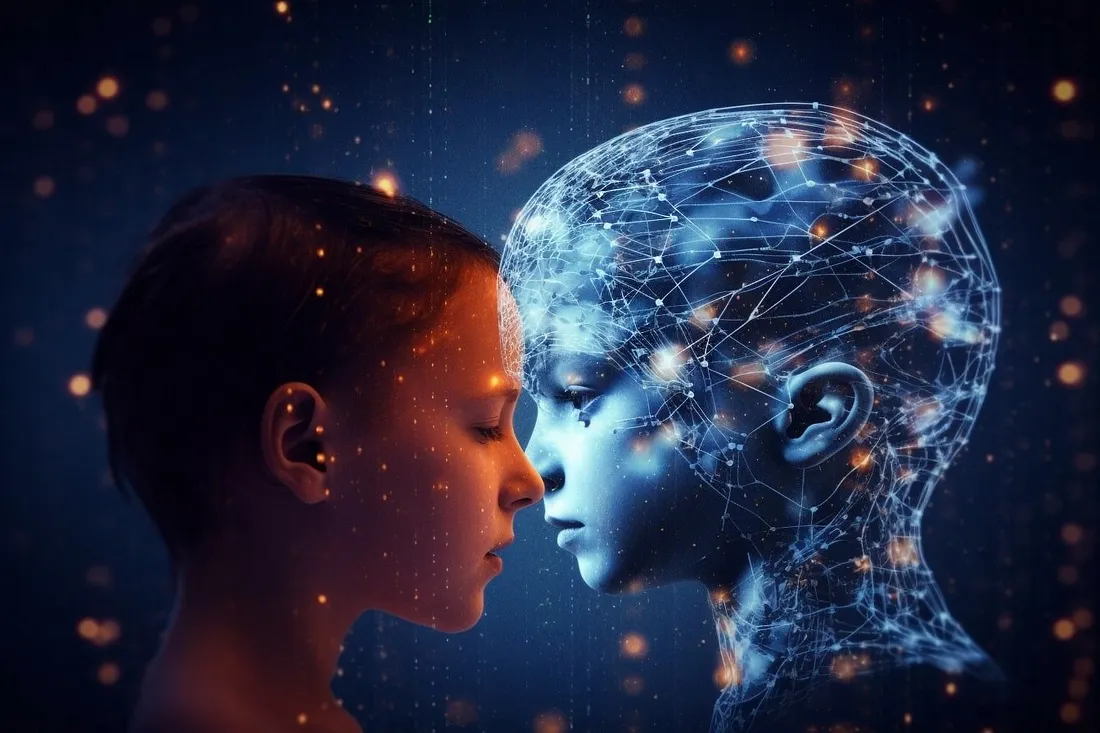
image source: neuroscience news
The gift of thought is the most precious thing we have. Without it, we would just be another species of animal.
— The Power of Now, Eckhart Tolle
What if I told you, “AI is at the brink of taking over humanity.”
Now, before you say — that’s ridiculous — and bounce off, hear me out in this 5-minute post.
We have all seen movies like the Terminator where the indestructible killer robot roams the streets wiping out everything that stands in its way.
That’s Hollywood playing with the theater of our minds. It’s all fiction.
But our minds are so gullible that we tend to perceive the last battle between man and machine to play out exactly like in the movies. And our friends at CNN, BBC, and the Washington Post have done an amazing job of reinforcing this perception.
But here’s the truth.
No AI robots are coming to take over our physical world. At least not in our lifetime.
But AI algorithms are already taking over our internal world. And by internal world, I mean our brains.
Here’s how.
The ChatGPT Moment
In November 2022, OpenAI released ChatGPT and the world took a deep sigh of relief.
Finally, we had at our fingertips an AI app that could handle all the mundane and generally dreaded tasks while we sat back and relaxed with a cup of coffee.
We could use it to politely reply to the annoying emails from our boss, complete Mrs. Johnson’s homework essay, write complex Python methods using lambda functions, compose musical lyrics, and much more. In fact, some people started using the app to write wedding vows and eulogies.
The use-cases of ChatGPT were only limited by our own imagination.
And it saved time, energy, and headaches. No doubt.
But the question is — at what cost?
Convenience Has a Price Tag
Take the fast food industry for example. It brought our favorite pizzas and burgers to our doorsteps but took away our steps. Now we have the highest population of obesity in the history of humanity. According to the WHO, in 2022, 1 in 8 people in the world were living with obesity. That’s the price we are paying for food convenience.
So what is the cost of using AI-powered apps like ChatGPT?
And I don’t mean the $20 monthly subscription fee.
I mean — what part of our brain, ourselves, our humanity are we sacrificing?
My Personal Wake-Up Call
While working as a Data Scientist with the UNDP in Istanbul, I was given early access to the premium version of ChatGPT as soon as it was made public.
I was ecstatic.
Given the overwhelming workload of managing a full-time job and a PhD course program, ChatGPT was exactly what I needed. I used it for almost every task: from writing and debugging code, to creating training course and presentation outlines, to writing request emails to my supervisors. I even remember prompting it to generate an image of Snoop Dogg as Santa Claus. True story.
I was mind-blown by the app’s capabilities.
For almost one year, not a day passed without me using ChatGPT in some way. My productivity skyrocketed — but my ability to think independently and critically slowly degenerated.
Caught up in the euphoria of ChatGPT’s capabilities, I didn’t notice I was sliding down a brainless slippery slope. ChatGPT became the first word that sprang to mind whenever I had any intellectual task to do. I was addicted and I didn’t know it.
When I noticed I was losing my sovereignty of original thought, that’s when I knew it was time to sober up.
The realization of losing my ability to think scared me to death.
As a writer, my sense of being, my sense of existence, my very own identity is closely tied to my ability to make sense of the chaos of my mind by stringing together words that paint a mental picture of what is happening within and without me. And if I lose that, I feel like I stop to exist.
Thinking is a Workout
One of the things that makes us human is our ability to think.
But thinking is a challenging activity. It is energy-draining. It is exhausting.
While the brain represents just 2% of a person’s total body weight, it accounts for 20% of the body’s energy use. Thinking is like taking your brain to the gym. And we can all agree — working out is painful, but good for the body.
Since our brains are evolutionarily wired to take the path of least resistance, we always try to avoid activities like exercising and thinking.
As William Zinsser once noted:
Writing is hard.
Why? Because it forces us to think.
So I ask again — what is the price we are paying for letting machines think for us? Machines whose inner workings even their creators do not fully understand.
A Word of Caution
This article is not meant to stop you from using AI applications. I still use them on a daily basis. However, I am now mindful of the tasks I delegate to them.
For instance, I don’t mind letting ChatGPT write a Python method or debug a piece of code. That saves time and multiplies my productivity. But I can’t let it write my Medium articles. (I can let it suggest a good title though — like the one on this post.)
This post is meant to create awareness of the hidden dangers that lurk behind the glamorous interfaces of these AI-powered apps, if misused. We should tread carefully, as overuse could lead to chronic addiction and even emotional dependence.
Remember — just like a drug can cure a man, if overused, the same drug can kill him.
Thanks for reading! If you found this article useful, subscribe for more related content. You can also connect with me on LinkedIn.
Leave a comment